

As education struggles to keep pace with rapidly evolving industry, AI emerges as India’s most powerful tool to bridge talent mismatch
AI opens doors for talented individuals who lack formal credentials but possess strong self-taught skills, says Manohar Javvaji – co-founder, Impacteers
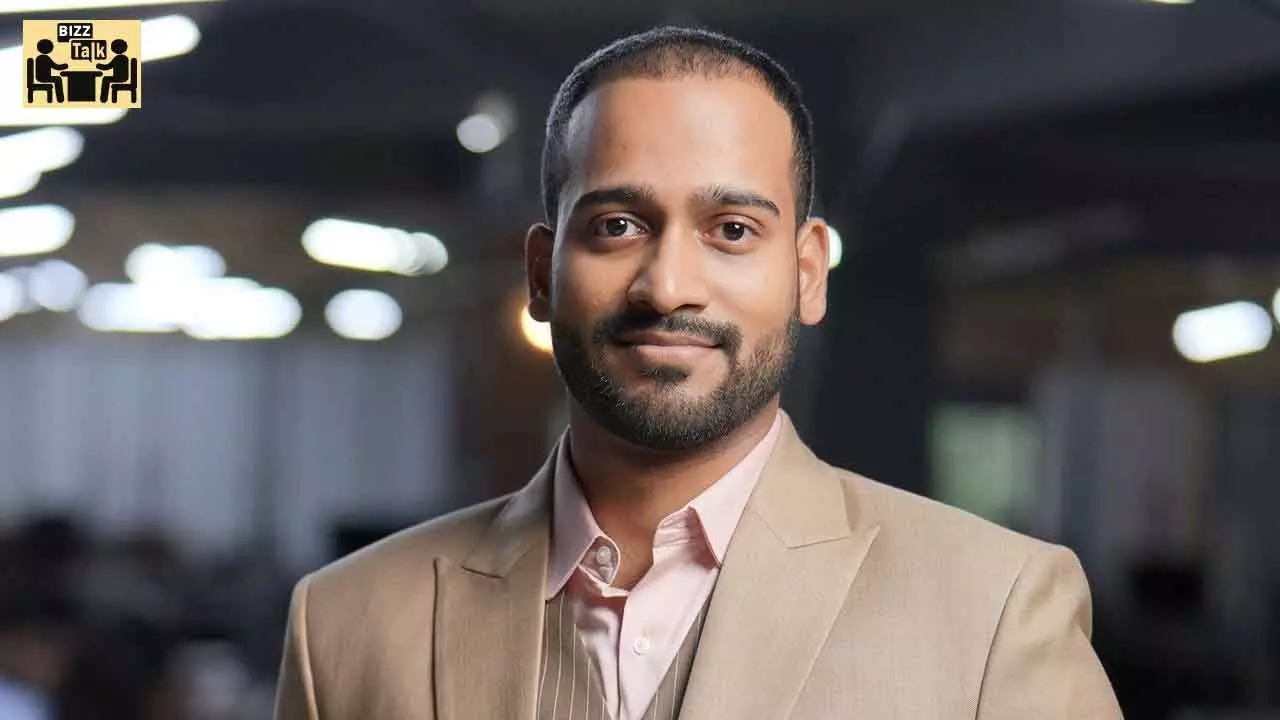
Manohar Javvaji, Co-founder, Impacteers
India has millions of job seekers and thousands of open roles, but they simply don’t match. Many graduates are entering the market with theoretical knowledge but lacking practical abilities in areas that companies expect, like digital tools, analytical problem-solving, or effective communication.
On the other hand, employers struggle to locate candidates who can perform from day one. The gap continues to widen as education often lags real industry demands, while technology and business models are evolving at high speed. AI can bridge great talent mismatch in India,” says Manohar Javvaji – Co-founder, Impacteers in an exclusive interaction with Bizz Buzz
What exactly is the great talent mismatch in India and why is it widening despite a large workforce and growing job opportunities?
India has millions of job seekers and thousands of open roles, but they simply don’t match. Many graduates are entering the market with theoretical knowledge but lacking practical abilities in areas that companies expect, like digital tools, analytical problem-solving, or effective communication. On the other hand, employers struggle to locate candidates who can perform from day one.
The gap continues to widen as education often lags real industry demands, while technology and business models are evolving at high speed. As a result, even though opportunities are growing, they rarely match the actual capabilities of the workforce entering the system each year.
How have traditional hiring models failed to keep pace with the changing nature of skills and job requirements?
Traditional hiring still relies heavily on degrees, institutions, and years of experience rather than actual capability. These criteria worked when job roles were stable, but today’s roles shift quickly due to automation, remote work, and new digital tools.
A resume cannot reveal whether a candidate can work with AI-driven systems, collaborate virtually, or adapt to changing workflows. This leads companies to select candidates who look ideal on paper but may not be equipped to handle the realities of modern work. As skills evolve faster than hiring methods, the mismatch grows wider, and organizations lose time and productivity.
In what ways can AI shift be hiring from qualification-based selection to skills-based evaluation and why is this important?
AI makes it possible to evaluate real ability through simulations, assessments, and task-based tests rather than relying on a degree as a proxy for skill. Instead of judging candidates by their academic background, AI can observe how they solve customer issues, write code, analyze data, or communicate in realistic scenarios.
This shift matters because it opens doors for talented individuals who may not have formal credentials but have developed strong skills through self-learning, freelancing, or non-traditional career paths. It creates a more level playing field where competence is valued over pedigree, improving fairness and widening the talent pool.
How does AI use data to create more accurate matches between candidates and roles by analyzing skills, experience, and behavioural traits?
AI studies patterns from thousands of successful employees to understand what actually drives performance in a specific role. For example, it may identify that those who thrive in a job typically demonstrate strong communication, quick learning ability, and proficiency in tools like Python or Excel. It then compares these traits with information gathered from a candidate’s assessments, work samples, and responses.
This data-backed approach reduces guesswork and results in matches that are more aligned with both role expectations and individual strengths. It acts like a highly informed matchmaker, learning continuously from outcomes to improve accuracy over time.
What role does AI play in predicting future skill needs and helping organizations plan their workforce more effectively?
AI analyzes trends across industries, technology shifts, hiring patterns, and market movements to forecast the skills companies will need in the near future. It might reveal that demand for roles such as AI prompt engineers or data-driven sales experts will surge in the coming year.
With this insight, organizations can begin preparing early by training existing employees or designing targeted hiring strategies. Instead of reacting when talent shortages already exist, they can stay ahead, reducing operational disruption and ensuring their workforce remains future ready. This proactive planning becomes essential in a rapidly evolving job landscape.
How can AI powered tools help identify hidden or non-traditional talent pools that are often overlooked in conventional hiring?
AI doesn’t care if you’re from IIT or a Tier-III college. It evaluates performance indicators like project outcomes, coding assessments, or problem-solving scores without being influenced by academic pedigree or region. This approach brings visibility to individuals from smaller institutions, self-taught learners, women returning to the workforce, or professionals from rural areas who traditionally slip through the cracks of manual screening.
When talent is assessed based on ability rather than background, organizations discover capable candidates they might otherwise miss. AI broadens the funnel and ensures that diverse groups with strong real-world skills receive equal consideration for opportunities.
In what ways can AI enable continuous upskilling and support employees in staying relevant to emerging job roles?
AI can analyze each employee’s current skills and compare them with emerging requirements in their field to pinpoint precise gaps. Based on this, it recommends personalized learning paths that include micro-courses, simulations, or mentorship opportunities timed for career needs.
This makes upskilling far more targeted than generic training programs. By nudging employees with the right learning at the right moment, AI supports ongoing growth and helps them stay competitive as roles evolve. It shifts learning from a one-time event to an ongoing, adaptive journey aligned with real job transitions.
Why is it essential to view AI as a partner that enhances human decision making rather than replacing the human role in hiring?
AI accelerates the process of identifying strong candidates by analyzing large volumes of data rapidly and consistently. However, people remain essential for evaluating culture fit, career aspirations, and personal motivations; factors machines cannot fully interpret.
Recruiters bring empathy, judgment, and the nuance required for meaningful human interactions. When AI handles data-heavy tasks and humans focus on relationship-based decisions, hiring becomes faster and more accurate without losing human touch. The best outcomes emerge from this collaboration rather than a replacement of one by the other.
What ethical and transparency-related safeguards should companies consider while implementing AI in talent management?
Organizations must ensure their AI systems remain ethical, fair, unbiased, and accountable. This includes routinely auditing algorithms to check that they do not unintentionally disadvantage any gender, community, or region. AI must also be transparent, so candidates understand how decisions are made and why they were selected or rejected.
Protecting data privacy is equally critical, with clear consent processes and secure handling of personal information. Companies should also offer candidates a mechanism to question decisions or correct inaccuracies. These safeguards build trust and ensure that AI enhances talent practices responsibly.
How can AI driven talent platforms help India move toward a future where all individuals’ skills are matched with the right opportunity?
AI platforms can assess people based on their unique skill sets rather than traditional resume labels, ensuring roles are matched with genuine capability. This helps individuals find work that aligns with their strengths while enabling companies to access better-suited talent.
Over time, such platforms create a more efficient and merit-focused ecosystem where mobility increases, and opportunities reach deserving candidates across regions and backgrounds. As this system scales, India can turn its demographic strength into a true competitive advantage by ensuring that ability, not background, determines access to growth and employment.





